
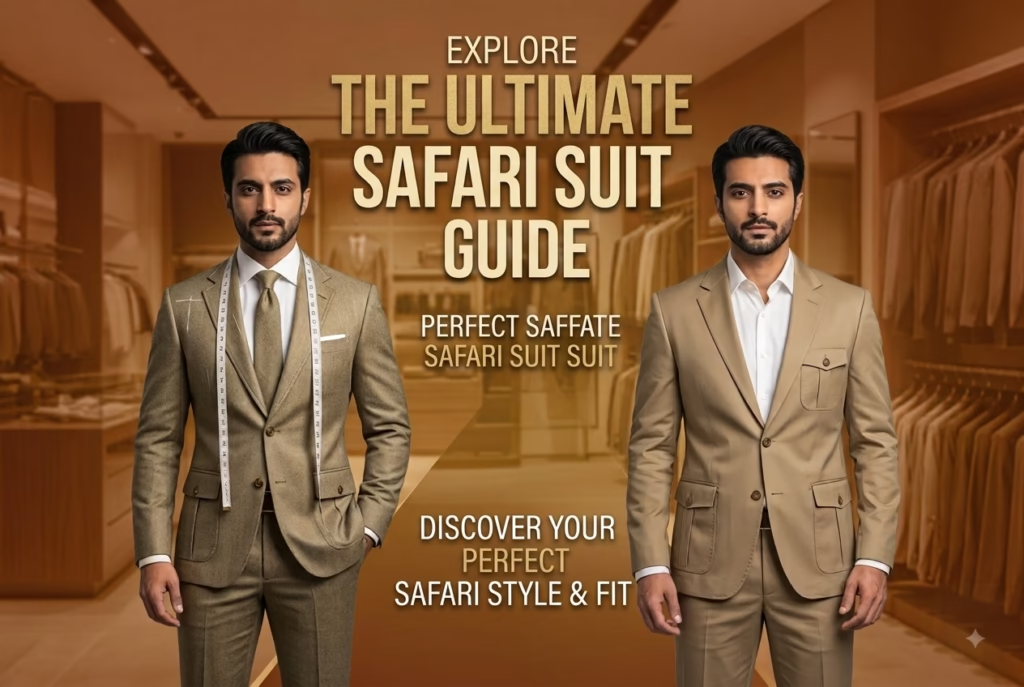
Some garments are created to follow fashion trends. Others become timeless because their design is genuinely useful.
The safari suit belongs firmly in the second category.
Recognized for its structured jacket, practical pockets, relaxed silhouette, and distinctive outdoor character, the safari suit has developed from functional clothing into a sophisticated menswear statement.
Its appeal lies in the balance between practicality and elegance. It offers the structure of tailored clothing while maintaining the comfort and freedom of movement associated with casual outerwear.
Today, the safari suit continues to appeal to men who appreciate distinctive menswear, functional design, and classic tailoring. In warm climates such as Karachi, its lightweight construction and relaxed styling can also make it a practical alternative to conventional formal jackets. At Yahya G, we approach the safari suit from a tailoring perspective—preserving its recognizable character while refining its fit, fabric, and finishing for the modern gentleman.
What Is a Safari Suit?
A safari suit traditionally consists of a coordinated jacket and trousers designed around a practical, slightly relaxed silhouette.
The jacket is the defining element.
Classic safari jackets typically feature:
- Multiple patch pockets
- Flapped chest pockets
- Waist pockets
- A structured collar
- Full-length sleeves
- Button closures
- A defined but comfortable waist
- Functional construction
The trousers are generally designed to complement the jacket in the same or a coordinating fabric.
Unlike a conventional business suit, the safari suit places greater emphasis on utility and relaxed sophistication.
That combination gives it a distinctive identity within men’s fashion.
The Origins of the Safari Suit
The safari suit developed from practical clothing associated with travel, outdoor exploration, military-inspired dress, and warm-climate environments.
Its design reflected the needs of people spending extended periods outdoors, where clothing had to provide comfort, durability, storage, and protection while allowing freedom of movement.
The name itself comes from “safari,” a Swahili word associated with a journey or expedition.
Over time, the practical garment evolved beyond its original outdoor context. Designers and style-conscious men began adopting its distinctive silhouette for leisure, travel, social occasions, and relaxed formal dressing.
By the mid-20th century, the safari-inspired look had become recognizable internationally as a symbol of adventure and understated sophistication. Its enduring popularity demonstrates that functional design can become timeless style.
What Makes a Safari Suit Different?
The safari suit occupies an interesting position between traditional tailoring and casual outerwear.
A conventional suit prioritizes formal structure and minimal detailing.
A safari suit does something different.
It combines:
Tailoring + Function + Comfort + Character
The defining feature is usually the jacket’s pocket structure.
Large patch pockets provide practical storage while also creating visual depth. The relaxed silhouette allows greater movement than a traditional business jacket, while the coordinated trousers maintain a polished appearance. This makes the safari suit particularly appealing to men who want something distinctive without sacrificing sophistication.
The Signature Features of a Safari Suit
Multiple Functional Pockets
The pocket design is perhaps the most recognizable feature.
Chest and waist pockets provide practical storage while giving the jacket its characteristic safari aesthetic.
Good tailoring is particularly important here. Poorly constructed pockets can distort the jacket, while carefully positioned pockets create a balanced silhouette.
Structured Yet Relaxed Fit
A safari suit should not feel restrictive.
The ideal fit provides enough room for movement while maintaining clean shoulders, a defined waist, and an elegant overall shape.
Notch or Structured Collar
The collar generally has a relaxed tailoring influence rather than the highly formal appearance associated with evening suits.
Coordinated Trousers
Matching trousers complete the safari suit and maintain its distinctive coordinated appearance.
Durable Construction
Because the safari suit originated from functional clothing, construction quality remains important. Reinforced seams, secure buttons, strong pocket construction, and quality finishing all contribute to longevity.
Choosing the Right Fabric for a Safari Suit
Fabric determines whether a safari suit feels heavy and uncomfortable or refined and effortless.
For warm climates such as Karachi, breathable materials are particularly important.
Cotton
Cotton is one of the most practical choices.
It offers:
- Breathability
- Comfort
- Durability
- Easy maintenance
Linen Blends
Linen blends are excellent for warmer weather because they provide airflow while maintaining more structure than pure lightweight linen.
Lightweight Wool Blends
For a more tailored interpretation, lightweight wool blends can provide a refined drape while maintaining comfort.
Performance Fabrics
Modern performance fabrics can offer wrinkle resistance, durability, and easier maintenance while preserving the safari suit’s distinctive appearance. At Yahya G, fabric selection is based on the intended use, climate, desired structure, and personal preference.
The Best Safari Suit Colours
The traditional safari suit is closely associated with natural and earthy colours.
Khaki
The classic safari colour.
Versatile, recognizable, and easy to style.
Tan
A slightly warmer alternative to khaki that works particularly well in summer.
Olive
A deeper and more contemporary interpretation of the traditional safari palette.
Beige
A sophisticated neutral that works well for urban styling.
Cream
An elegant warm-weather option, particularly for evening events and resort-inspired dressing. For a first safari suit, khaki, beige, or olive generally offer the greatest versatility.
How to Style a Safari Suit
One of the safari suit’s greatest strengths is its ability to move between different levels of formality.
Classic Safari Styling
For a traditional interpretation, pair a khaki safari suit with:
- A crisp white shirt
- Brown leather shoes
- A leather belt
- A classic watch
This combination maintains the garment’s heritage-inspired character without looking costume-like.
Modern Urban Styling
For a contemporary look, simplify the accessories.
Wear the safari jacket with:
- A plain white or neutral shirt
- Tailored trousers
- Minimalist loafers
- A simple watch
The result is relaxed, sophisticated, and distinctly modern.
Warm-Weather Styling
In Karachi’s climate, lightweight fabrics and breathable shirts make the safari suit particularly practical.
A linen-blend shirt and lightweight safari jacket can create a polished appearance without the heaviness of traditional formalwear.
Safari Jacket as a Standalone Piece
You don’t always have to wear the complete suit.
A well-tailored safari jacket can be paired with contrasting trousers, chinos, or other neutral separates. This gives the garment a more contemporary character and increases its versatility.
Can You Wear a Safari Suit in Karachi?
Absolutely—provided it is designed with the local climate and occasion in mind.
Karachi’s warm weather makes fabric selection especially important.
A heavy safari suit may feel uncomfortable for extended daytime wear, while a lightweight cotton or linen-blend version can provide significantly better breathability.
A custom safari suit also allows the wearer to adjust:
- Jacket length
- Sleeve construction
- Pocket placement
- Waist suppression
- Trouser fit
- Fabric weight
- Overall silhouette
This makes bespoke tailoring particularly valuable when adapting a classic garment to a modern Karachi wardrobe.
When Should You Wear a Safari Suit?
The safari suit is not intended to replace every type of formalwear.
Instead, it occupies a distinctive space between formal tailoring and relaxed sophistication.
It works particularly well for:
- Travel
- Outdoor gatherings
- Garden events
- Resort occasions
- Smart-casual dinners
- Creative professional environments
- Lifestyle photography
- Private social events
For highly formal occasions such as black-tie dinners or traditional wedding ceremonies, a tuxedo, suit, sherwani, or prince coat may be more appropriate. The key is understanding the occasion.
Safari Suit vs Traditional Suit
| Feature | Safari Suit | Traditional Suit |
| Overall Style | Functional & Relaxed | Formal & Refined |
| Pocket Design | Multiple Functional Pockets | Minimal |
| Fit | Relaxed Tailoring | Structured |
| Best Climate | Warm & Outdoor-Friendly | Climate Dependent |
| Best For | Travel, Social & Smart Casual | Business & Formal Events |
| Visual Character | Distinctive | Classic |
| Versatility | High | Very High |
Neither is objectively better. They simply serve different purposes within a well-rounded wardrobe.
Why Custom Tailoring Makes a Difference
The safari suit’s distinctive design makes fit especially important.
Because the jacket contains several pockets and structural elements, poor proportions can quickly make the garment look bulky.
A custom safari suit allows the tailor to carefully balance:
- Shoulder width
- Jacket length
- Pocket placement
- Waist shape
- Sleeve length
- Trouser proportions
The result is a safari suit that retains its functional character without looking oversized or dated.
At Yahya G, the objective is not simply to reproduce a classic design. It is to reinterpret it for the modern gentleman.
The Yahya G Approach to Safari Suits
At Yahya G, our tailoring philosophy combines traditional craftsmanship with contemporary menswear sensibility.
A custom safari suit begins with understanding the client:
Where will you wear it?
What climate will you wear it in?
How relaxed or structured should the fit be?
Which details reflect your personal style?
From there, fabric, colour, proportions, pockets, buttons, and finishing details can be selected to create a garment that feels genuinely personal.
Our approach focuses on:
- Precise measurements
- Premium fabrics
- Balanced proportions
- Functional construction
- Refined finishing
- Long-term wearability
The result is a safari suit that feels distinctive without becoming overly theatrical.
Frequently Asked Questions About Safari Suits
What is a safari suit?
A safari suit is a coordinated men’s outfit typically consisting of a practical, structured jacket with multiple pockets and matching trousers. It combines elements of tailoring with functional outdoor-inspired design.
Is a safari suit still fashionable?
Yes. Its classic silhouette continues to appeal to men who appreciate distinctive, functional menswear. Modern tailoring can update the proportions and fabrics while preserving its recognizable character.
Can I wear a safari suit in Karachi?
Yes. Lightweight cotton, linen blends, and breathable fabrics can make safari suits suitable for Karachi’s warm climate.
What colour safari suit should I buy first?
Khaki, beige, tan, and olive are the most versatile choices and remain closest to the safari suit’s traditional aesthetic.
Can a safari jacket be worn separately?
Absolutely. A safari jacket can be paired with contrasting trousers or chinos, creating a more contemporary smart-casual look.
Is a safari suit suitable for weddings? It can work for certain daytime, outdoor, or relaxed wedding-related events. However, for highly formal ceremonies, groom wear such as a sherwani, prince coat, or tuxedo may be more appropriate.
Final Thoughts: Function Can Be Beautiful
The safari suit has survived changing fashion trends because its appeal goes beyond appearance.
Its practical pockets, relaxed structure, durable construction, and distinctive silhouette give it a character that few garments can replicate.
But its greatest strength is its adaptability.
A safari suit can evoke the spirit of classic exploration while fitting comfortably into a modern urban wardrobe. With the right fabric, proportions, and styling, it can feel just as relevant today as it did decades ago.
For men in Karachi and across Pakistan who want something beyond conventional suits and traditional formalwear, a custom safari suit offers an opportunity to build a wardrobe around individuality, functionality, and timeless style.
At Yahya G, we bring more than three decades of tailoring heritage to every garment we create. Our custom approach allows the classic safari suit to be refined for the modern gentleman—with premium fabrics, precise fitting, and carefully considered details.
Visit Yahya G at Shop #237, 2nd Floor, Dolmen Center, Tariq Road, Karachi, or contact us on WhatsApp at 0312 525 4264 to discuss your custom safari suit.