
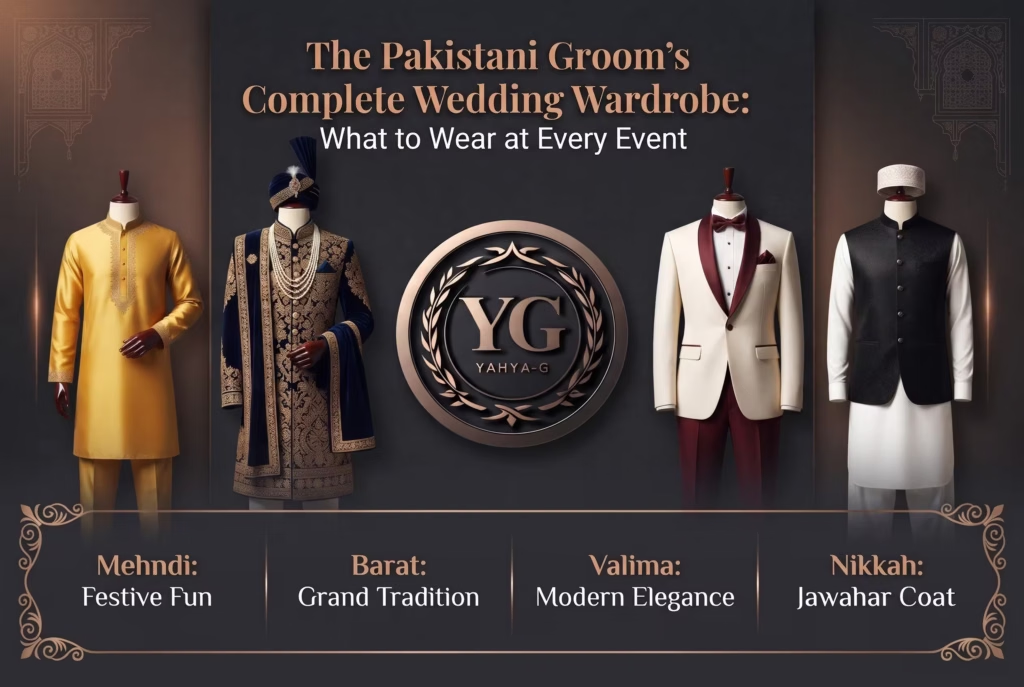
A Pakistani wedding is rarely a one-day celebration. It is a series of memorable occasions filled with family gatherings, traditional rituals, music, food and festivities. From the first dholki to the final walima, every event has its own atmosphere, dress code and cultural significance.
While the bride’s wardrobe often receives considerable attention, the groom also deserves a carefully planned collection of outfits. The challenge is to look distinctive at every function, coordinate with the bride and family themes, respect cultural traditions and remain comfortable throughout the celebrations.
The secret is not to wear the most expensive outfit at every event. It is to choose the right combination of fabric, colour, tailoring and accessories for each occasion.
Here is a complete guide to building a Pakistani groom’s wedding wardrobe, with outfit ideas for every major event.
1. Dholki: Relaxed, Comfortable and Traditional
The dholki is usually one of the most relaxed events of a Pakistani wedding. It brings family and friends together for traditional songs, drumming, dancing and informal celebrations.
For this occasion, the groom should choose something festive without looking overly formal.
Recommended outfit:
- A well-fitted kurta shalwar in mint green, powder blue, soft peach, ivory or light grey.
- Lightweight cotton, cotton-silk or breathable blended fabric.
- A simple waistcoat for a slightly more polished appearance.
- Comfortable Kolhapuri chappals, Peshawari sandals or loafers.
A plain or subtly textured kurta is often enough. Heavy embroidery, stiff fabrics and elaborate accessories are unnecessary for a casual gathering.
The most important consideration is comfort. Choose an outfit that allows you to sit, move and dance easily while still looking well-dressed in family photographs.
2. Mayun: Simple Yellow and Traditional Charm
Mayun, also known in some families as the ubtan ceremony, is a traditional pre-wedding celebration associated with turmeric, blessings and family rituals.
Yellow is the most recognisable colour for this event, although cream, ivory and other warm shades can also work beautifully.
Recommended outfit:
- A simple yellow or mustard kurta.
- Cream, off-white or beige shalwar.
- Lightweight cotton, linen or cotton-silk fabric.
- Minimal accessories, such as a classic wristwatch.
- Simple traditional footwear.
Since turmeric and other ceremonial products may come into contact with the clothing, avoid wearing an expensive or delicate outfit that is difficult to clean.
A plain kurta with a neat fit is usually the best choice. If you want a more festive appearance, consider a lightweight stole or a subtly contrasting waistcoat.
The objective is to maintain a traditional look while keeping the outfit practical and comfortable.
3. Mehndi: Bold Colours and Festive Styling
Mehndi is one of the most colourful and energetic events of a Pakistani wedding. Bright decorations, music, dancing and coordinated family outfits create an atmosphere where the groom can experiment with more expressive styling.
This is the perfect occasion to introduce brighter colours, interesting textures and traditional embroidery.
Recommended colours:
- Mustard yellow
- Emerald green
- Royal blue
- Maroon
- Burnt orange
- Deep teal
- Rust
Popular outfit combinations:
| Outfit | Styling idea |
| Embroidered kurta | Pair with a plain shalwar and traditional khussa |
| Kurta with waistcoat | Choose a contrasting or complementary waistcoat |
| Printed kurta | Add simple footwear and minimal accessories |
| Kurta with stole | Use a contrasting stole for a more festive appearance |
A waistcoat can add structure and sophistication without making the outfit too formal. Traditional embroidery, subtle prints and textured fabrics can also create an attractive look.
How to Coordinate with the Bride
The groom’s outfit should complement the bride’s mehndi attire without necessarily matching it exactly.
For example, if the bride wears yellow and green, the groom can choose emerald green with mustard details. If she wears orange and pink, a rust or deep maroon outfit may create an attractive contrast.
Breathable fabric is especially important because mehndi celebrations often involve dancing and extended periods of activity. Make sure the sleeves, shoulders and trousers allow comfortable movement.
4. Baraat: The Groom’s Grand Entrance
The baraat is traditionally one of the most significant events in a Pakistani wedding. It is the occasion when the groom makes his grand entrance, often surrounded by family, friends and elaborate wedding celebrations.
This is where a beautifully tailored sherwani can make a lasting impression.
A sherwani is a long, structured traditional coat, usually worn over a kurta with shalwar, churidar or another suitable trouser style. Its formal silhouette, rich fabrics and decorative details make it a popular choice for Pakistani grooms.
Popular Sherwani Colours
The right colour depends on the wedding theme, the bride’s outfit, the venue and the groom’s personal preference.
- Ivory and cream: Elegant, timeless and versatile.
- Champagne and gold: Luxurious choices for a traditional wedding appearance.
- Maroon and burgundy: Rich colours that create a regal impression.
- Navy and midnight blue: Sophisticated alternatives to traditional wedding shades.
- Black: A striking option for grooms who prefer a bold formal look.
Best Fabrics for a Baraat Sherwani
| Fabric | Appearance | Suitable for |
| Raw silk | Structured with a refined sheen | Classic wedding sherwanis |
| Jamawar | Rich woven patterns and traditional character | Regal and heritage-inspired designs |
| Velvet | Deep texture and luxurious appearance | Winter weddings and statement outfits |
| Brocade | Decorative woven patterns | Traditional and elaborate styles |
| Silk blends | Smooth finish and varied weights | Contemporary wedding designs |
Embroidery can further enhance the sherwani. Techniques such as Zardozi, Dabka, Tilla and traditional threadwork offer different levels of decoration and texture.
The choice should reflect the overall design. A heavily embroidered sherwani does not always look better than a simpler one. Good proportions, balanced detailing and precise tailoring are equally important.
Accessories That Complete the Baraat Look
- Safa or pagri: A traditional headpiece that can complement the sherwani and wedding colour palette.
- Kulla: A traditional cap or headwear style used in some regional wedding traditions.
- Khussa or Mojari: Traditional footwear that complements the sherwani.
- Stole or shawl: Adds another layer of colour, texture and formality.
- Brooch or Kalgi: A decorative accessory that can enhance the turban or upper part of the outfit.
- Sehra: A traditional floral or decorative veil worn by some grooms.
Not every accessory needs to be included. Select pieces that work together rather than competing for attention.
For summer weddings, lighter silk fabrics and breathable linings can improve comfort. For winter celebrations, velvet, heavier Jamawar and suitable shawls can create a richer appearance.
5. Nikah: Elegant, Graceful and Respectful
The Nikah is the religious heart of the wedding. It is a meaningful occasion that calls for a dignified, graceful and appropriately formal appearance.
Some grooms wear the same sherwani for the Nikah and Baraat, while others prefer a separate outfit with simpler detailing.
Recommended outfit options:
- Ivory or cream sherwani with subtle embroidery.
- Off-white kurta shalwar with a formal waistcoat.
- A tailored Prince Coat over a traditional kurta.
- Beige or pastel-toned traditional attire.
- A simple, well-fitted outfit with minimal accessories.
Soft colours such as ivory, beige, champagne, light blue and pastel green work particularly well.
If the Nikah is held separately from the Baraat, a more understated outfit can help distinguish the occasion. Keep the embroidery balanced and choose accessories that complement the overall look.
A clean haircut, neatly groomed beard or a well-maintained shave and polished footwear will complete the appearance.
6. Walima: Sophisticated and Contemporary
The walima is the reception hosted by the groom’s family. It is an opportunity to move towards a more contemporary and sophisticated style.
Unlike the traditional grandeur of the Baraat, the walima often allows the groom to experiment with Western formalwear, modern tailoring and refined traditional outfits.
Popular Walima Outfit Choices
1. Three-Piece Suit
A well-tailored three-piece suit remains one of the most popular choices for a formal walima.
Consider:
- Navy blue
- Charcoal grey
- Midnight blue
- Black
- Deep green
A fitted jacket, matching waistcoat and well-cut trousers create a coordinated and polished appearance.
2. Two-Piece Formal Suit
For a slightly lighter and more contemporary look, a two-piece suit can be an excellent option. Pair it with a crisp formal shirt, an elegant tie or a more relaxed open-collar style, depending on the event’s dress code.
3. Prince Coat
A Prince Coat offers a refined traditional alternative to a Western suit. It works particularly well for grooms who want a formal South Asian appearance without wearing another sherwani.
4. Velvet Jacket
For an evening reception, a velvet jacket can add texture and character. Pair it with well-fitted formal trousers and understated accessories.
Walima Accessories
- A coordinated pocket square.
- Elegant cufflinks.
- A quality wristwatch.
- Polished leather Oxford or Derby shoes.
- A well-chosen tie, where appropriate.
- A formal belt that matches the footwear.
The key is precision. A well-fitted suit in a classic colour will generally create a more timeless appearance than an outfit overloaded with unnecessary details.
7. Rukhsati and Post-Wedding Dawats: Simple but Well-Dressed
After the main wedding events, the celebrations often continue with family gatherings, farewell moments and post-wedding dinners.
For these occasions, the groom does not need another heavily embroidered or elaborate outfit.
A simple, well-tailored kurta shalwar is often ideal for Rukhsati and smaller family gatherings. White, grey, beige and light pastel shades offer a clean and graceful appearance.
For post-wedding dawats, consider:
- A crisp kurta with a tailored waistcoat.
- A well-fitted shirt with formal trousers.
- A simple traditional outfit in a neutral colour.
- Comfortable loafers or traditional footwear.
Rukhsati can be an emotional and closely photographed moment, so even a relatively simple outfit should be properly pressed and well-fitted.
For informal family dinners, smart-casual dressing is perfectly appropriate. The goal is to look presentable without appearing overdressed.
8. How to Plan a Complete Pakistani Groom Wedding Wardrobe
Planning individual outfits for every function can become expensive and confusing. A coordinated wardrobe makes it easier to maintain a distinctive appearance throughout the wedding while avoiding unnecessary purchases.
Here is a practical outfit-planning guide:
| Wedding event | Recommended outfit | Overall style |
| Dholki | Pastel kurta shalwar | Relaxed and traditional |
| Mayun | Yellow or cream kurta | Simple and comfortable |
| Mehndi | Embroidered kurta with waistcoat | Colourful and festive |
| Baraat | Custom sherwani | Regal and traditional |
| Nikah | Subtle sherwani or Prince Coat | Elegant and dignified |
| Walima | Three-piece or two-piece suit | Modern and sophisticated |
| Rukhsati / Dawat | Kurta shalwar or smart-casual outfit | Refined and comfortable |
You do not necessarily need seven completely new outfits. Some pieces can be reused with different waistcoats, footwear or accessories, particularly for smaller functions.
The most important investment should be in the outfits that will receive the most attention and remain significant in your wedding photographs.
9. Practical Tips for Every Pakistani Groom
A successful wedding wardrobe requires more than selecting attractive colours. Planning, tailoring and attention to detail make a considerable difference.
Plan Your Colour Palette in Advance
Coordinate your outfits with your partner and discuss the wedding themes with both families. Request fabric swatches or reference photographs before finalising important outfits.
Your clothes should complement the bride’s wardrobe and the event decorations without looking unnecessarily identical.
Start Custom Tailoring Early
Wedding garments such as sherwanis, Prince Coats and bespoke suits require careful measurements, construction and fittings.
Start the process early, especially during Pakistan’s busy wedding season. Allow enough time for fabric selection, design approval, trial fittings and final adjustments.
Choose Fabrics According to the Weather
Karachi’s climate can make fabric selection particularly important.
For warmer weather, consider lightweight silk blends, cotton-silk fabrics and breathable linings. For winter weddings, velvet, heavier Jamawar and structured fabrics can provide a richer finish.
The fabric should suit both the season and the duration of the event.
Respect Family and Regional Traditions
Wedding customs vary between families and regions. Some families place particular importance on the colour of the turban, the use of a sehra or specific traditional accessories.
Discuss these details with family elders before finalising your outfits.
Pay Attention to Grooming
A carefully selected outfit can lose its impact if the smaller details are overlooked.
Plan your haircut, beard grooming, footwear, fragrance and accessories in advance. Make sure your clothes are properly pressed and your shoes are clean.
Balance Your Budget
Not every event requires an expensive designer outfit.
Spend strategically:
- Invest in a well-tailored sherwani for the Baraat.
- Choose a quality suit or Prince Coat for the Walima.
- Keep Dholki and Mayun outfits simple.
- Experiment with accessories and waistcoats to create different looks.
- Consider renting selected outfits if purchasing them does not make practical sense.
A thoughtful wardrobe can look impressive without requiring an entirely new outfit for every function.
10. Why Custom Tailoring Makes a Difference for the Groom
Wedding outfits are among the most photographed garments a man will wear. Their fit, proportions and finishing can make a significant difference to the overall appearance.
Ready-made clothing offers convenience, but it may not always provide the exact fit, design details or fabric combinations a groom wants.
Custom tailoring allows you to make decisions about:
- Fabric quality, colour and texture.
- Sherwani length, collar and silhouette.
- Embroidery placement and level of detailing.
- Jacket structure and shoulder fit.
- Waistcoat and trouser proportions.
- Personal measurements and finishing details.
For a groom, a custom-made sherwani or suit is not simply about wearing something expensive. It is about creating an outfit that complements his body shape, personal style and wedding occasion.
At Yahya G, bespoke menswear combines traditional tailoring expertise with contemporary design sensibilities. From custom sherwanis and Prince Coats to formal suits and wedding outfits, each garment is developed with attention to fabric, fit and finishing.
Final Thoughts: Dress for Every Moment, Not Just the Wedding Day
A Pakistani groom’s wardrobe should tell a story throughout the wedding celebrations.
It begins with relaxed traditional dressing at the Dholki, moves into the cheerful colours of Mayun and Mehndi, becomes regal at the Baraat, graceful at the Nikah and sophisticated at the Walima.
Every event offers an opportunity to express a different side of your personal style while respecting the traditions that make Pakistani weddings special.
Remember, the best wedding outfit is not necessarily the most expensive or heavily embroidered one. It is the outfit that fits properly, suits the occasion, complements the bride and makes you feel confident.
Plan your wardrobe early, choose fabrics carefully and invest in quality tailoring. With the right preparation, you can look distinctive at every celebration and create memories that remain timeless.
Create Your Wedding Look with Yahya G
Your wedding deserves more than an ordinary outfit. At Yahya G, we bring together bespoke tailoring, carefully selected fabrics and refined craftsmanship to create menswear for life’s most memorable occasions.
Explore our collections of custom sherwanis, groom wear, Prince Coats, formal suits and traditional menswear.
Yahya G – Infinite Fashion
Shop #237, 2nd Floor, Dolmen Center, Tariq Road, Karachi
WhatsApp: 0312 525 4264
Bespoke Menswear. Refined Craftsmanship. Infinite Fashion.