
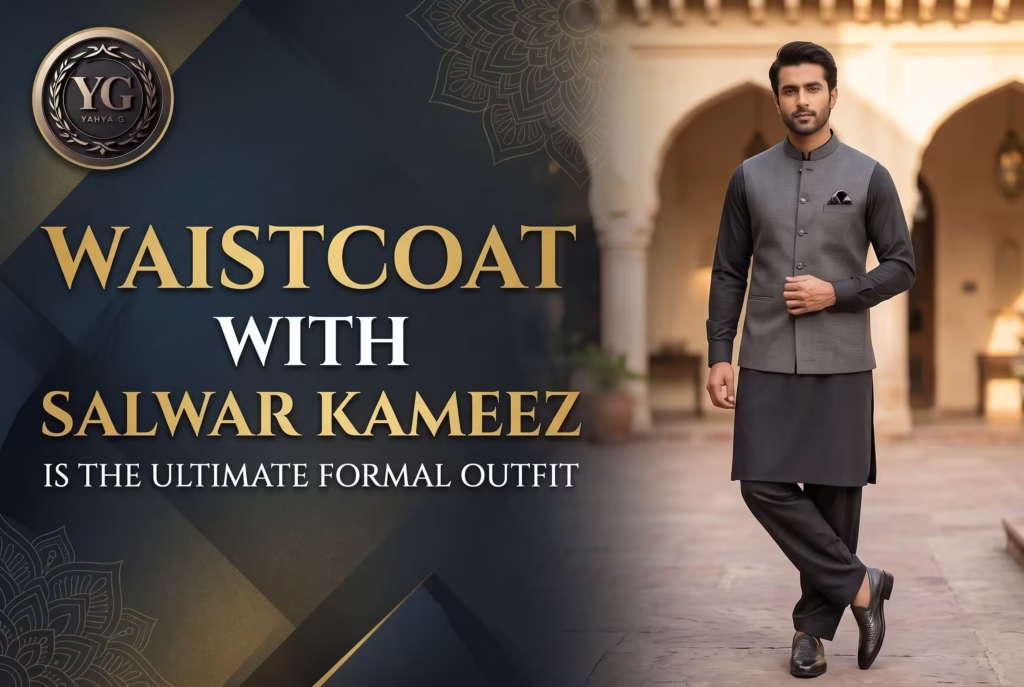
In Pakistani menswear, few combinations are as timeless and versatile as a well-tailored waistcoat worn with a shalwar kameez. It brings together traditional clothing, refined tailoring, and contemporary style in an outfit that feels both culturally rooted and sophisticated.
Whether you are attending a wedding, preparing for an important business meeting, celebrating Eid, or dressing for a formal family gathering, a waistcoat can transform a simple shalwar kameez into a polished ensemble.
The secret, however, lies in the details. Fabric, fit, colour coordination, and thoughtful styling determine whether the combination looks ordinary or exceptionally refined.
For men who appreciate traditional elegance, a waistcoat with shalwar kameez is one of the most versatile choices in formal Pakistani menswear. It offers an alternative to Western-style suits without compromising on presentation, individuality, or sophistication.
Why Is a Waistcoat with Shalwar Kameez Considered Formal Dressing?
A shalwar kameez can be styled for everyday wear, religious occasions, business settings, and celebrations. Its level of formality depends on the fabric, tailoring, colour, and overall presentation.
Adding a waistcoat introduces another layer of structure and visual definition.
Here is why the combination works so well.
1. It Creates a More Structured Silhouette
The shalwar kameez naturally has a relaxed silhouette. A fitted waistcoat adds definition around the chest and torso, creating a more composed appearance.
When the waistcoat fits properly, it complements the kameez rather than making the outfit look bulky.
2. It Adds Depth and Contrast
A waistcoat introduces another colour, texture, or pattern to the outfit.
For example, a charcoal waistcoat over a white shalwar kameez creates a classic formal combination. A navy waistcoat with a light blue kameez offers a softer, contemporary look.
For weddings and celebrations, richer colours and decorative fabrics can add character without requiring excessive accessories.
3. It Makes Traditional Clothing More Versatile
The same shalwar kameez can look different depending on the waistcoat you choose.
A plain cotton outfit with a simple waistcoat may be appropriate for a business meeting, while a textured or Jamawar waistcoat can make the combination suitable for a wedding or festive gathering.
This versatility makes the waistcoat a practical addition to a traditional wardrobe.
A Timeless Combination in Pakistani Menswear
Shalwar kameez has a longstanding place in the clothing traditions of South Asia and is Pakistan’s national dress. The waistcoat has also become a familiar element of Pakistani formal and semi-formal menswear.
Together, they create a distinctive style that combines traditional clothing with the clean lines of tailored dressing.
Today, the combination is worn by professionals, business owners, wedding guests, grooms, and men who prefer traditional attire for important occasions.
Its appeal comes from its adaptability. A simple waistcoat can create a restrained, professional appearance, while a more elaborate design can bring a celebratory quality to the same basic outfit.
Types of Waistcoats to Wear with Shalwar Kameez
Choosing the right waistcoat style is essential because its design influences the overall character of the outfit.
1. Classic Plain Waistcoat
Pakistani menswear white shalwar kameez charcoal plain tailored waistcoat traditional formal mens fashion full outfit.
A plain waistcoat is one of the most versatile options for traditional formal dressing.
Its clean appearance makes it suitable for business meetings, formal dinners, family gatherings, and occasions where understated elegance is preferred.
Best colours: Navy, charcoal, black, beige, and deep grey.
2. Textured Waistcoat
Pakistani men’s traditional shalwar kameez textured navy waistcoat elegant tailored menswear editorial.
Textured fabrics add visual interest without relying on bold patterns or elaborate embroidery.
Depending on the fabric and cut, a textured waistcoat can work for daytime functions, evening gatherings, and smart-casual occasions.
Best colours: Navy, olive, taupe, charcoal, and deep brown.
3. Jamawar Waistcoat
Pakistani groom menswear traditional maroon gold Jamawar waistcoat white shalwar kameez luxury wedding attire.
Jamawar waistcoats are particularly suited to weddings and festive occasions. Their woven patterns and rich appearance can make a traditional outfit feel more celebratory.
Because Jamawar fabrics often have prominent designs, balance is important. A relatively simple kameez allows the waistcoat to remain the focal point.
Best colours: Maroon, bottle green, navy, gold-toned shades, and deep burgundy.
4. Embroidered Waistcoat
Pakistani men’s formal ivory embroidered waistcoat over cream shalwar kameez elegant groom wear traditional fashion.
Embroidery can introduce additional detail for grooms, wedding guests, and men attending special celebrations.
The design may be subtle around the collar and front opening or more elaborate, depending on the occasion.
For a sophisticated result, consider the amount of embroidery on the waistcoat alongside the fabric and colour of the kameez.
5. Contemporary Slim-Cut Waistcoat
Modern Pakistani menswear slim tailored navy waistcoat white shalwar kameez contemporary formal outfit.
A contemporary waistcoat uses cleaner lines and carefully controlled proportions to create a modern appearance.
It can work well for younger professionals, formal dinners, and men who prefer a streamlined silhouette.
However, slim-cut should not mean tight. The waistcoat must allow comfortable movement and sit smoothly over the kameez.
How to Choose the Right Fabric Fabric plays a major role in the appearance, comfort, and suitability of a waistcoat.
| Fabric | Overall Appearance | Best Occasion |
| Wool or wool blend | Refined and structured | Business and formal gatherings |
| Cotton | Simple and understated | Daytime events and smart-casual wear |
| Linen or linen blend | Light and relaxed | Warm-weather occasions |
| Jamawar | Rich and decorative | Weddings and celebrations |
| Velvet | Luxurious and distinctive | Selected evening and festive occasions |
| Textured woven fabric | Subtle visual interest | Semi-formal and formal gatherings |
The fabric should complement the kameez rather than compete with it.
For everyday professional wear, a plain or subtly textured waistcoat is often the most versatile option. For weddings, Jamawar, velvet, or embroidered fabrics can create a more distinctive appearance.
In Karachi’s warm climate, consider the weight and breathability of the materials, especially if you expect to wear the outfit for several hours.
Best Colour Combinations for Waistcoat with Shalwar Kameez
Colour coordination is one of the easiest ways to improve a traditional outfit. The right combination should look intentional, balanced, and appropriate for the occasion.
| Shalwar Kameez Colour | Waistcoat Colour | Style |
| White | Navy | Classic and versatile |
| White | Charcoal | Refined and formal |
| Cream | Bottle green | Traditional and sophisticated |
| Light blue | Navy | Modern and professional |
| Black | Charcoal or tonal black | Minimal and contemporary |
| Beige | Deep brown | Warm and understated |
| Ivory | Maroon | Festive and elegant |
| Light grey | Black | Sharp and formal |
For Business and Official Occasions
Choose understated colours such as navy, charcoal, black, or deep grey. A plain waistcoat and a neatly pressed kameez create a professional appearance without excessive decoration.
For Weddings and Festive Events
Richer colours such as maroon, bottle green, deep blue, and selected gold-toned shades can add a celebratory touch.
The more decorative the waistcoat, the simpler the accompanying garments can be.
For Daytime Gatherings
Lighter colours, subtle textures, and restrained contrasts can create a fresh, elegant look.
Getting the Fit Right: The Secret to a Refined Appearance
Even an expensive fabric cannot compensate for a poorly fitted waistcoat.
Fit is particularly important because a waistcoat sits over the kameez and adds structure to an otherwise relaxed outfit.
Shoulders
The shoulder line should sit naturally without extending too far beyond the wearer’s frame.
Chest and Buttons
The waistcoat should sit smoothly across the chest. Buttons should fasten without pulling, creating horizontal creases, or making the garment appear strained.
Waist
A tailored waistcoat should follow the body’s shape without restricting movement or feeling excessively tight.
Length
The length should complement the kameez and the wearer’s proportions. It should cover the waist appropriately without looking disproportionately short or unnecessarily long.
Armholes
The armholes should allow comfortable movement without cutting into the body or creating excessive gaps.
Shalwar Kameez Fit
The kameez should sit comfortably across the shoulders and chest, with sleeves and length suited to the wearer’s build and personal preference.
The shalwar or trousers should complement the overall silhouette and be neatly pressed when the occasion calls for formal dressing.
A well-fitted waistcoat should enhance the shalwar kameez, not overpower it.
What Should You Wear Under a Waistcoat?
The most appropriate choice depends on the occasion.
For classic formal dressing, a well-fitted shalwar kameez in a refined fabric is the natural choice.
For professional settings, keep the kameez relatively simple and avoid unnecessary decorative elements.
For weddings, you can consider richer fabrics, subtle textures, or coordinating details that complement the waistcoat.
The neckline and collar should also work with the waistcoat’s design. A clean, well-finished collar helps the entire outfit appear more considered.
How to Style a Waistcoat for Different Occasions
Weddings and Groom Wear
For a groom or wedding guest, a Jamawar or embroidered waistcoat can create a festive look without requiring an elaborate sherwani.
Choose colours that complement the event and the rest of the outfit. Grooms may prefer richer fabrics or more distinctive detailing, while guests can achieve an elegant appearance with simpler designs.
Business Meetings and Professional Settings
A plain navy, charcoal, or black waistcoat with a crisp white or light-coloured kameez is a reliable choice.
Keep the styling restrained, ensure the outfit is properly pressed, and select footwear that suits the environment.
Eid and Religious Occasions
For Eid prayers, family visits, and other religious occasions, a well-fitted waistcoat can make traditional clothing feel more polished.
Light colours and breathable fabrics are particularly practical in warmer weather.
Formal Dinners and Receptions
A darker waistcoat paired with a complementary kameez creates an elegant evening look.
Subtle texture or refined detailing can add character without making the outfit too busy.
Footwear and Accessories: Completing the Outfit
The right finishing touches make a difference, but restraint is usually the best approach.
Footwear: Peshawari chappals and traditional khussas work well with many cultural and festive outfits. Polished loafers or formal shoes may be suitable for business and dressier settings.
Watch: A simple, well-proportioned wristwatch can complement the outfit without attracting unnecessary attention.
Pocket details: If the waistcoat design allows it, a subtle pocket square can introduce a small amount of contrast. It is optional rather than essential.
Grooming: Neat hair, well-maintained facial hair, and clean footwear help create a complete appearance.
Avoid adding too many competing colours, patterns, or accessories. The waistcoat should remain part of a coordinated outfit rather than an isolated statement piece.
Common Mistakes to Avoid
Even a traditional outfit can lose its elegance when small details are overlooked.
- Choosing the wrong fit: A waistcoat that pulls at the buttons or hangs loosely can undermine the entire look.
- Ignoring pressing: A wrinkled kameez beneath a structured waistcoat creates an untidy contrast.
- Mixing too many patterns: A heavily patterned waistcoat may not work well with an equally elaborate kameez.
- Using unsuitable footwear: Sports shoes may clash with a traditionally formal outfit unless the combination is deliberately styled.
- Ignoring fabric weight: Heavy materials can feel uncomfortable during long events in warm weather.
- Over-accessorizing: Too many decorative elements can distract from the garment’s tailoring and design.
- Following trends without considering proportions: A slim or short waistcoat may not suit every body type.
A balanced outfit is usually more sophisticated than one that relies on excessive decoration.
Is a Waistcoat with Shalwar Kameez Better Than a Western Suit? Neither outfit is universally better. They serve different stylistic preferences and may suit different settings.
| Consideration | Shalwar Kameez with Waistcoat | Western Suit |
| Cultural character | Strong connection to South Asian traditional menswear | Associated with Western tailoring traditions |
| Styling | Traditional, contemporary, or festive | Business, formal, or ceremonial |
| Comfort | Can be comfortable with suitable fabric and fit | Depends on fabric, construction, and fit |
| Formality | Suitable for many Pakistani formal settings | Suitable for many corporate and formal settings |
| Customization | Fabric, kameez cut, waistcoat and details can be personalized | Jacket, trousers, shirt and other details can be personalized |
The better option depends on the event, dress expectations, climate, and the wearer’s personal style.
In Pakistan, a well-tailored waistcoat with shalwar kameez can be an entirely appropriate choice for many professional and ceremonial occasions. For international business settings or events with a specified dress code, it is sensible to follow the requirements of the occasion.
Why Custom Tailoring Makes a Difference
Ready-made waistcoats can be convenient, but their proportions may not work equally well for every wearer or every shalwar kameez.
Custom tailoring allows greater control over details such as:
- Chest and waist measurements
- Waistcoat length
- Shoulder proportions
- Button placement
- Pocket design
- Fabric and lining
- Colour coordination
- Overall silhouette
These decisions are particularly valuable when the waistcoat is intended for an important event.
At Yahya G, bespoke menswear focuses on the relationship between fit, fabric, proportions, and finishing. A waistcoat should complement the wearer and the complete outfit, rather than simply follow a standard size.
Frequently Asked Questions
Is a waistcoat with shalwar kameez considered formal?
Yes. A well-fitted waistcoat with a neatly pressed shalwar kameez is widely worn for formal and semi-formal occasions in Pakistan, including weddings, business gatherings, and celebrations. The appropriate level of formality depends on the fabric, design, and event.
Which waistcoat colour looks best with a white shalwar kameez?
Navy, charcoal, black, bottle green, and maroon can all work well. Navy and charcoal are particularly versatile, while richer colours are often suitable for festive occasions.
Can I wear a waistcoat with shalwar kameez to a wedding?
Absolutely. A plain tailored waistcoat offers understated elegance, while Jamawar, velvet, or embroidered styles can create a more celebratory look. The best choice depends on your role at the event and its dress expectations.
Is a plain or patterned waistcoat better?
A plain waistcoat is generally easier to style and more versatile. A patterned waistcoat can add character and is particularly useful for festive occasions. The key is to balance the pattern with the kameez.
Should a waistcoat be tight or loose?
It should follow the body without restricting movement. The buttons should close comfortably, and the fabric should sit smoothly without excessive pulling or sagging.
Can I wear a waistcoat with shalwar kameez for business meetings?
Yes. A plain waistcoat in navy, charcoal, or another understated colour, paired with a clean and well-pressed kameez, can create a professional appearance in settings where traditional Pakistani attire is appropriate.
Which fabric is best for a formal waistcoat?
Wool blends and refined textured fabrics are useful for many formal settings. Jamawar and velvet can be suitable for weddings and celebrations. The ideal fabric depends on the season, comfort requirements, and desired appearance.
Where can I get a custom waistcoat in Karachi?
For a custom waistcoat, look for a tailoring service that considers your measurements, preferred fabric, intended occasion, and the proportions of the shalwar kameez you plan to wear with it.
Final Thoughts: Traditional Dressing with Modern Refinement
A waistcoat with shalwar kameez is more than a convenient combination. It is a versatile expression of Pakistani menswear that brings together tradition, comfort, and tailored sophistication.
From business meetings and official gatherings to Eid celebrations and weddings, the outfit can adapt to a wide range of occasions when the fabric, fit, and styling are chosen carefully.
A plain waistcoat can communicate understated elegance. A textured design can introduce contemporary character. A Jamawar or embroidered waistcoat can make the outfit suitable for a special celebration.
The difference is not simply in the garment itself, but in how thoughtfully it is put together.
Discover Bespoke Waistcoat Tailoring at Yahya G
Looking for a custom waistcoat in Karachi to complement your shalwar kameez?
At Yahya G, thoughtful tailoring, carefully selected fabrics, and attention to proportion help create traditional menswear suited to your personal style and occasion.
Visit us to explore bespoke menswear for formal gatherings, weddings, and everyday refinement.
Yahya G
Shop #237, 2nd Floor, Dolmen Center, Tariq Road, Karachi
WhatsApp: 0312 525 4264Bespoke Menswear. Refined Craftsmanship. Infinite Fashion.