
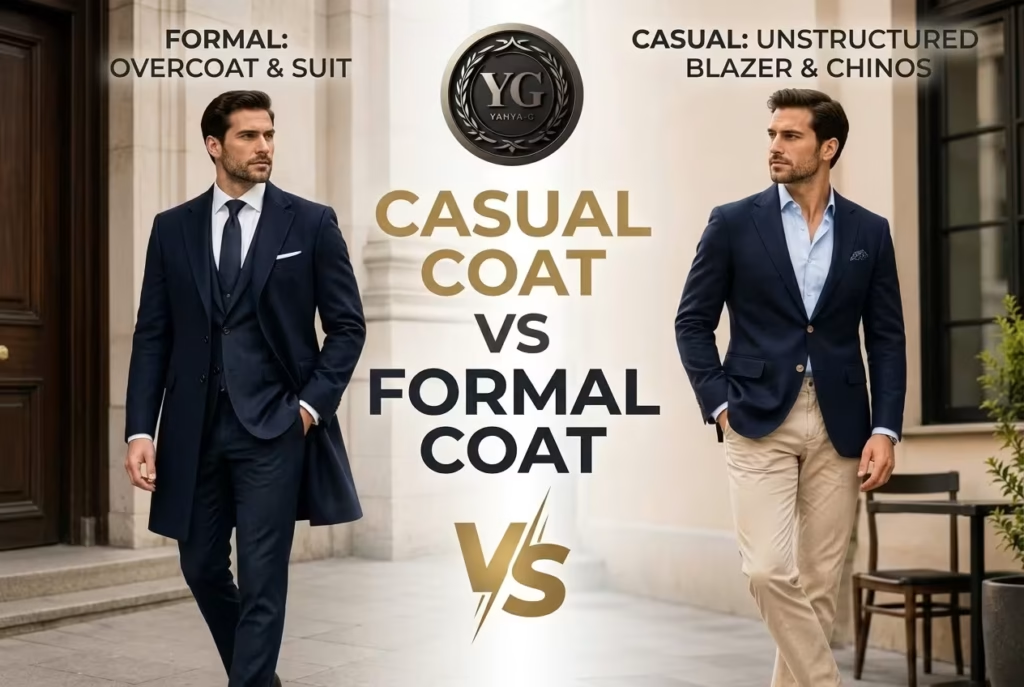
A coat is more than a layer you put on when the temperature drops. The right coat can complete an outfit, define your overall appearance, and make a strong difference in how appropriately you are dressed for an occasion.
But not every coat serves the same purpose.
A casual coat is generally designed around comfort, practicality, and relaxed styling. A formal coat, on the other hand, is designed to complement tailored clothing and create a more polished appearance.
Understanding the difference between casual and formal coats can help you build a more versatile wardrobe—and avoid arriving underdressed or overdressed for the occasion.
Whether you are dressing for everyday life, business, a wedding, or an evening event, knowing which coat works with your outfit is an important part of refined menswear.
What Is a Casual Coat?
A casual coat is designed primarily for everyday wear, comfort, practicality, and relaxed styling.
Common examples include:
- Field jackets
- Bomber jackets
- Denim jackets
- Parkas
- Puffer jackets
- Casual trench coats
- Utility jackets
These coats are generally easier to layer and are often designed with practical features for everyday use.
Common Characteristics of Casual Coats
Relaxed silhouettes:
Casual coats often have roomier or more relaxed proportions, making them comfortable over T-shirts, knitwear, sweatshirts, and other casual layers.
Practical fabrics:
Cotton, denim, nylon, fleece, canvas, and other durable materials are frequently used.
Functional details:
Large pockets, zippers, drawstrings, hoods, snaps, and adjustable cuffs are common.
Relaxed colors and finishes:
Olive, khaki, navy, black, grey, and earthy shades are popular, while washed or textured finishes can further reinforce a casual character.
A casual coat is the type of outerwear you can comfortably wear for errands, travel, casual meetings, weekend activities, or relaxed social occasions.
What Is a Formal Coat?
A formal coat is designed to complement more polished and structured clothing.
Examples include:
- Wool overcoats
- Topcoats
- Chesterfield coats
- Tailored wool coats
- Dressier peacoats
- Classic long coats
Formal coats are particularly useful when worn over suits, tailored trousers, dress shirts, and other refined outfits.
Common Characteristics of Formal Coats
Tailored proportions:
A formal coat generally has cleaner lines and more controlled proportions than casual outerwear.
Refined fabrics:
Wool and wool blends are commonly associated with formal outerwear because of their structure, drape, and sophisticated appearance.
Minimal detailing:
Formal coats typically avoid excessive zippers, oversized pockets, drawstrings, and other strongly utilitarian details.
Classic colors:
Charcoal, navy, black, camel, and grey are versatile choices for formal outerwear.
A formal coat does more than provide warmth. It completes the visual structure of a tailored outfit.
Casual Coat vs Formal Coat: Key Differences
| Feature | Casual Coat | Formal Coat |
| Primary purpose | Comfort and everyday practicality | Polished appearance and tailored styling |
| Fit | Relaxed or roomy | Structured and tailored |
| Common fabrics | Denim, cotton, nylon, canvas, fleece | Wool, wool blends, cashmere and refined textiles |
| Length | Cropped to hip or longer | Usually mid-thigh to knee length |
| Details | Pockets, zippers, hoods, drawstrings | Minimal, refined detailing |
| Typical colors | Olive, khaki, navy, black, earthy tones | Navy, charcoal, black, camel, grey |
| Best with | Jeans, chinos, knitwear, sneakers | Suits, tailored trousers, dress shirts |
| Common settings | Everyday, travel, weekends | Business, weddings, formal events |
| Overall impression | Relaxed and practical | Refined and polished |
The distinction is not absolute. Modern menswear increasingly combines formal and casual elements, which means the styling of the complete outfit matters as much as the coat itself.
Fit: The Biggest Difference
One of the easiest ways to distinguish casual and formal outerwear is the way it fits.
Casual Coat Fit
Casual coats usually allow greater freedom of movement and additional layering.
A field jacket, parka, or bomber can comfortably accommodate a sweater or sweatshirt underneath.
The silhouette may be intentionally relaxed.
Formal Coat Fit
A formal coat needs more careful proportions.
If you plan to wear it over a suit, it should have enough room for the suit jacket without becoming excessively loose.
The shoulders should sit naturally, the sleeves should provide appropriate coverage, and the coat length should complement the proportions of the person wearing it.
A formal coat should look structured without feeling restrictive.
Fabric Makes a Difference
Fabric strongly influences how a coat looks and feels.
Casual Coat Fabrics
Casual outerwear often uses practical fabrics chosen for durability, weather resistance, or easy maintenance.
Examples include:
- Cotton
- Denim
- Canvas
- Nylon
- Fleece
- Technical fabrics
- Waxed cotton
These materials can create a more relaxed visual character.
Formal Coat Fabrics
Formal coats commonly use fabrics with a refined appearance and good drape.
Wool is particularly popular because it can provide warmth, structure, and a sophisticated finish.
Other options can include wool blends and premium natural-fiber fabrics.
The choice should also reflect the climate and intended use of the coat.
Coat Length and Proportion
Length is another important distinction.
Casual outerwear can range from cropped jackets to longer parkas and field coats.
Formal coats tend to be longer, often extending toward the mid-thigh or lower, depending on the style.
A longer silhouette can create a more elegant line when worn over tailored clothing.
However, coat length should always be considered in relation to the wearer’s height, build, trousers, and overall proportions.
A coat that looks excellent on one person may require different proportions on another.
When Should You Wear a Casual Coat?
A casual coat is appropriate when comfort and relaxed styling are the priority.
Consider a casual coat for:
- Weekend outings
- Everyday errands
- Travel
- Casual dinners
- Coffee meetings
- Outdoor activities
- Informal social gatherings
- Relaxed workplaces
Casual coats work particularly well with:
- Jeans
- Chinos
- Polo shirts
- T-shirts
- Knitwear
- Casual shirts
- Sneakers
- Boots
The goal is usually a coordinated but relaxed appearance.
When Should You Wear a Formal Coat?
A formal coat becomes particularly useful when your outfit includes tailored or formal clothing.
Consider one for:
- Business meetings
- Professional settings
- Interviews
- Weddings
- Formal dinners
- Evening events
- Theatres and cultural events
- Formal winter occasions
A formal coat can be worn over:
- Business suits
- Dress shirts
- Tailored trousers
- Formal knitwear
- Blazers
- Other refined menswear
A well-chosen wool overcoat, for example, can transition between professional and formal social settings with ease.
Can You Wear a Formal Coat Casually?
Absolutely.
Modern menswear does not always require a strict separation between formal and casual clothing.
A well-cut camel, navy, grey, or charcoal overcoat can be styled with:
- Dark denim
- Chinos
- Knitwear
- Minimal sneakers
- Boots
- Casual shirts
The contrast between a refined coat and relaxed clothing can create a sophisticated smart-casual look.
The key is balance.
A formal coat paired with deliberately casual pieces can look intentional. A formal coat combined with too many unrelated casual elements can make the outfit feel disconnected.
Can You Wear a Casual Coat with Formal Clothing?
This requires more care.
Some casual jackets can work with tailored trousers or a shirt, particularly in creative or smart-casual environments.
However, strongly casual pieces—such as heavily insulated puffers, sporty jackets, or distressed denim—can clash with highly formal clothing.
For example, wearing a technical outdoor jacket over a formal suit may create a significant difference in visual formality.
If the occasion is genuinely formal, a tailored overcoat or another dressier outer layer is usually more harmonious with the rest of the outfit.
Which Coat Should You Buy First?
The answer depends on your lifestyle.
If You Wear Suits Frequently
A navy or charcoal wool overcoat can provide considerable versatility.
It can complement business suits while also working with tailored trousers and smart-casual clothing.
If Your Lifestyle Is Mostly Casual
A well-fitted field jacket, bomber, or practical everyday coat may receive much more use.
Choose a versatile neutral color that works with most of your wardrobe.
If You Want One Coat for Multiple Situations
Look for a versatile tailored coat in a neutral color with enough room for layering.
A relatively understated design can move between smart-casual and formal settings more easily than a highly specialized coat.
Ultimately, the most useful coat is the one that fits your actual lifestyle.
Casual Coat vs Formal Coat: Which Is More Expensive?
Price depends heavily on the fabric, construction, brand, craftsmanship, and design.
A casual coat can range from an inexpensive everyday jacket to a highly technical or luxury outerwear piece.
Likewise, formal coats can range from commercially produced wool coats to premium bespoke garments.
Therefore, it is inaccurate to assume that every formal coat is more expensive than every casual coat.
For tailored formal outerwear, however, factors such as high-quality fabric, construction, customization, and individual fitting can increase the cost.
Does a More Expensive Coat Last Longer?
Not automatically.
Longevity depends on:
- Fabric quality
- Construction
- Stitching
- Hardware
- Frequency of wear
- Maintenance
- Storage
- How well the coat suits its intended use
A well-made coat that is properly maintained can remain part of a wardrobe for many years.
Caring for Casual Coats
Care requirements vary according to the material.
Always check the manufacturer’s care instructions before washing or cleaning the garment.
For casual coats:
- Follow the recommended washing instructions.
- Avoid unnecessary washing.
- Treat stains promptly.
- Check whether waterproofing needs to be renewed.
- Allow damp garments to dry properly before storage.
- Repair damaged zippers, buttons, or seams before the problem becomes worse.
Specialized fabrics, insulated coats, and waxed garments may require specific care.
Caring for Formal Coats
Formal wool coats benefit from careful handling.
Use a Proper Hanger
A broad, sturdy hanger can help preserve the shoulder structure.
Brush the Coat
A clothing brush can help remove surface dust and particles after wear.
Allow It to Air
After wearing the coat, give it time to air before putting it into long-term storage.
Avoid Unnecessary Cleaning
Follow the care instructions and avoid cleaning a formal coat more often than necessary.
Store It Properly
During warmer months, store the coat in a breathable garment bag in a dry environment.
Good storage can make a significant difference to the life of a quality coat.
Building a Versatile Coat Wardrobe
You do not need a large collection of outerwear.
For many men, two carefully selected coats can cover a substantial portion of their wardrobe.
1. A Versatile Formal Coat
Choose a classic neutral such as navy, charcoal, grey, or camel.
It can work with suits as well as more relaxed tailored outfits.
2. A Practical Casual Coat
Select a versatile everyday piece such as a field jacket, bomber, or practical winter coat.
Choose a color that complements the clothes you already own.
Together, these two categories provide a useful foundation for different seasons, occasions, and levels of formality.
Frequently Asked Questions
What is the main difference between a casual and formal coat?
A casual coat generally emphasizes comfort, practicality, and relaxed styling, while a formal coat is designed to complement tailored clothing and create a more polished appearance.
Can I wear an overcoat with jeans?
Yes. A well-cut overcoat can work with jeans, particularly when the rest of the outfit is clean and coordinated. Dark denim, knitwear, and understated footwear can create an effective smart-casual combination.
Can I wear a casual coat over a suit?
Some casual outerwear can work over a suit in relaxed settings, but highly sporty or utilitarian jackets may clash with formal tailoring. For business or formal occasions, a tailored overcoat is usually more appropriate.
What is the most versatile formal coat color?
Navy, charcoal, grey, black, and camel are among the most versatile choices. The best option depends on the colors already present in your wardrobe.
Is a wool overcoat suitable for weddings?
A refined wool overcoat can work very well for weddings, particularly during cooler weather. The color and styling should complement the formality and color palette of the rest of the outfit.
Should a formal coat be loose?
A formal coat should provide enough room for the layers underneath while maintaining a clean silhouette. It should not be excessively tight or unnecessarily oversized.
Can a formal coat be tailored?
Yes. Depending on its construction, a coat may be altered to improve certain aspects of its fit. A custom-made coat offers greater control over proportions from the beginning.
Final Thoughts: Choose the Coat for the Occasion
The difference between a casual coat and a formal coat ultimately comes down to purpose, construction, fabric, fit, and styling.
A casual coat gives you practicality, comfort, and freedom for everyday life.
A formal coat adds structure, refinement, and polish to tailored clothing.
Neither is universally better. The right choice depends on where you are going, what you are wearing, the weather, and the impression you want your outfit to create.
For a well-rounded wardrobe, having one versatile casual coat and one refined formal coat can provide an excellent foundation.
And when the occasion calls for something more personal, a custom or bespoke coat allows the fit, fabric, proportions, and details to be designed specifically around you.
Find Your Perfect Formal Outerwear at Yahya G
At Yahya G, we believe exceptional menswear begins with the right fit and thoughtful details.
For clients looking for custom coats in Karachi, formal outerwear, tailored jackets, or bespoke menswear for important occasions, every element can be considered—from fabric and silhouette to proportions and finishing.
Yahya G
Shop #237, 2nd Floor, Dolmen Center, Tariq Road, Karachi
WhatsApp: 0312 525 4264Bespoke Menswear. Refined Craftsmanship. Infinite Fashion.